Americas

Central Hub for the Americas

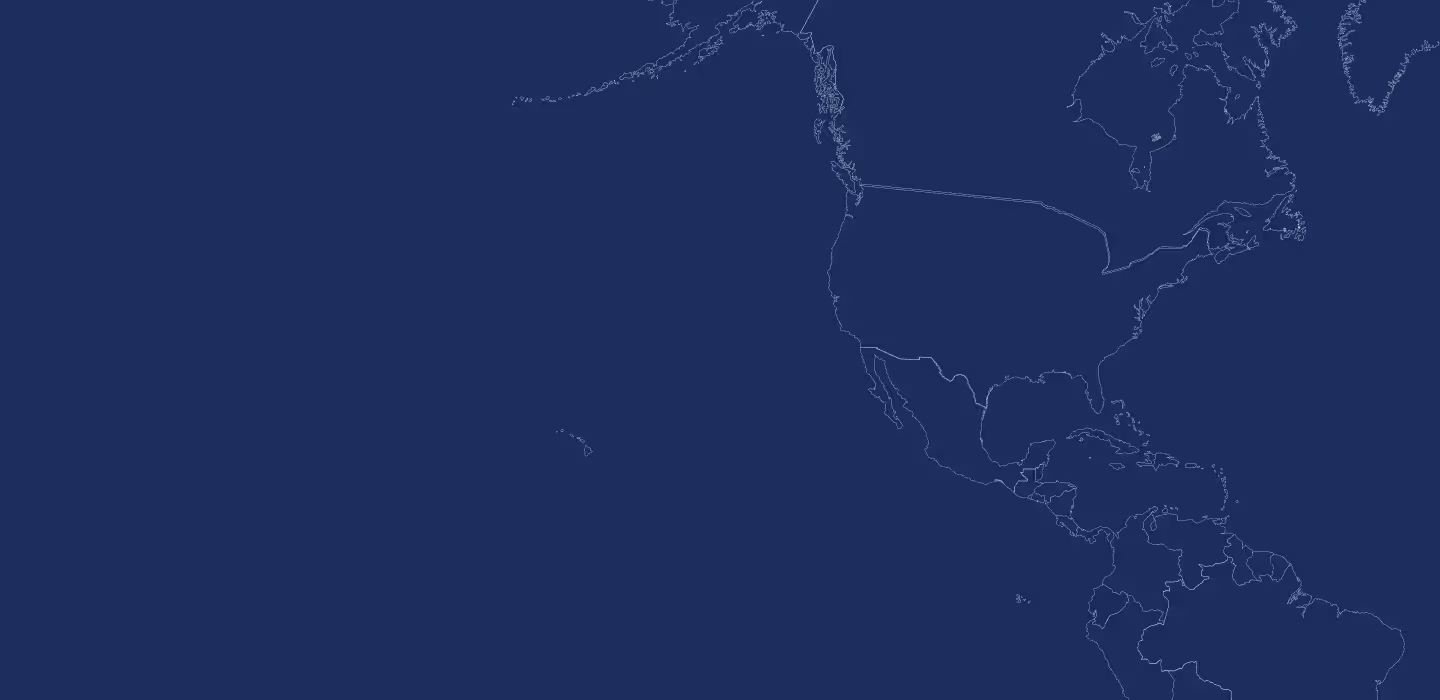
Map of the Americas highlighting pharmaceutical compliance regions

Navigating the Regulatory Landscape

This page serves as a centralized resource for understanding pharmaceutical regulatory requirements across countries in the Americas. Each country listed below includes a summary of its compliance landscape along with a link to more detailed information. From DSCSA adherence in the United States to evolving serialization mandates across Latin America, this hub provides streamlined access to the regulatory frameworks shaping pharmaceutical supply chains throughout the region.

All Regulations

Graphic element

US DSCSA

Navigate the intricacies of the Drug Supply Chain Security Act (DSCSA) with LSPedia. Our resource hub provides insights and updates, ensuring pharmaceutical companies stay compliant in the ever-evolving US regulatory environment.

Argentina ANMAT

Argentina operates a national pharmaceutical traceability program managed by Administración Nacional de Medicamentos, Alimentos y Tecnología Médica (ANMAT).

The system is called the National Medicines Traceability System (Sistema Nacional de Trazabilidad de Medicamentos – SNT) and tracks medicines from manufacturer or importer through distribution to dispensing. The objective is to prevent counterfeit medicines and allow regulators to monitor product movement in real time across the supply chain.

All supply chain participants including manufacturers, importers, distributors, logistics operators, pharmacies, and hospitals must report traceability events to ANMAT’s central database.  

Unlike many modern systems, Argentina’s program focuses on event reporting rather than full hierarchical aggregation, but serialized identifiers must still be maintained across distribution activities.

Brazil Anvisa

Brazil previously planned to implement a national pharmaceutical serialization system known as the National Drug Control System (SNCM) under the authority of the Brazilian Health Regulatory Agency (ANVISA). The program aimed to establish full traceability of medicines across the supply chain using serialization and electronic reporting.

However, the national serialization mandate was revoked before full nationwide implementation. The Brazilian government formally withdrew the SNCM traceability mandate, and there is currently no active national requirement for pharmaceutical serialization or serial level reporting in Brazil.

Pharmaceutical traceability in Brazil therefore operates primarily through batch level identification, supply chain documentation, and regulatory oversight managed by ANVISA.

Canada

Pharmaceutical products in Canada are regulated by Health Canada under the Food and Drugs Act and the Food and Drug Regulations. Health Canada oversees the authorization, labeling, manufacturing, importation, and distribution of medicines to ensure product safety, quality, and efficacy.

Canada does not currently operate a national pharmaceutical serialization or track and trace system similar to those implemented in the United States, European Union, or several Middle East and CIS countries. Instead, regulatory oversight focuses on product authorization, good manufacturing practices, labeling compliance, and pharmacovigilance.

Canada has implemented drug identification and verification mechanisms, including the Drug Identification Number (DIN) and national drug product databases that allow regulators and healthcare professionals to verify approved medicines. Supply chain traceability is generally managed through industry systems and wholesale distribution records, rather than through a centralized regulatory serialization platform.

Colombia

Colombia has explored the implementation of a national pharmaceutical traceability system to strengthen supply chain transparency and combat counterfeit medicines. The initiative was introduced by the Ministry of Health and Social Protection and the national regulator Instituto Nacional de Vigilancia de Medicamentos y Alimentos (INVIMA) through the development of the National Medicines Traceability System (Sistema Nacional de Trazabilidad de Medicamentos).

The objective of this system is to enable identification and monitoring of medicines throughout the supply chain, from manufacturing or importation through distribution to dispensing.

However, serialization and full pharmaceutical track and trace reporting are not currently mandatory in Colombia. The traceability program has remained largely in pilot and regulatory development stages, and nationwide serialization enforcement has not yet been implemented.

Pharmaceutical companies operating in Colombia therefore focus on regulatory compliance and supply chain documentation, while monitoring regulatory updates related to the potential future implementation of traceability requirements.

Ecuador

Ecuador regulates pharmaceutical products through the National Agency for Regulation, Control and Health Surveillance (ARCSA). The country has established requirements to strengthen medicine identification and improve traceability across the pharmaceutical supply chain.

The regulatory framework focuses on standardized product identification using GS1 barcodes and the capture of product data to support traceability and product verification. The objective is to reduce counterfeit medicines and improve regulatory visibility of pharmaceutical distribution.

Manufacturers, importers, and distributors supplying medicines to Ecuador must ensure pharmaceutical products include standardized barcode identification and maintain traceability records throughout the distribution chain.

No Regulations Found

Click clear all to reset the filters.

Thank you! Your submission has been received!
Oops! Something went wrong while submitting the form.
Contact us

Get in touch today

Send us a message

We'd love to hear from you!

Check - Elements Webflow Library - BRIX Templates

Thank you

Thanks for reaching out. We will get back to you soon.
Oops! Something went wrong while submitting the form.