美洲

Central Hub for the Americas

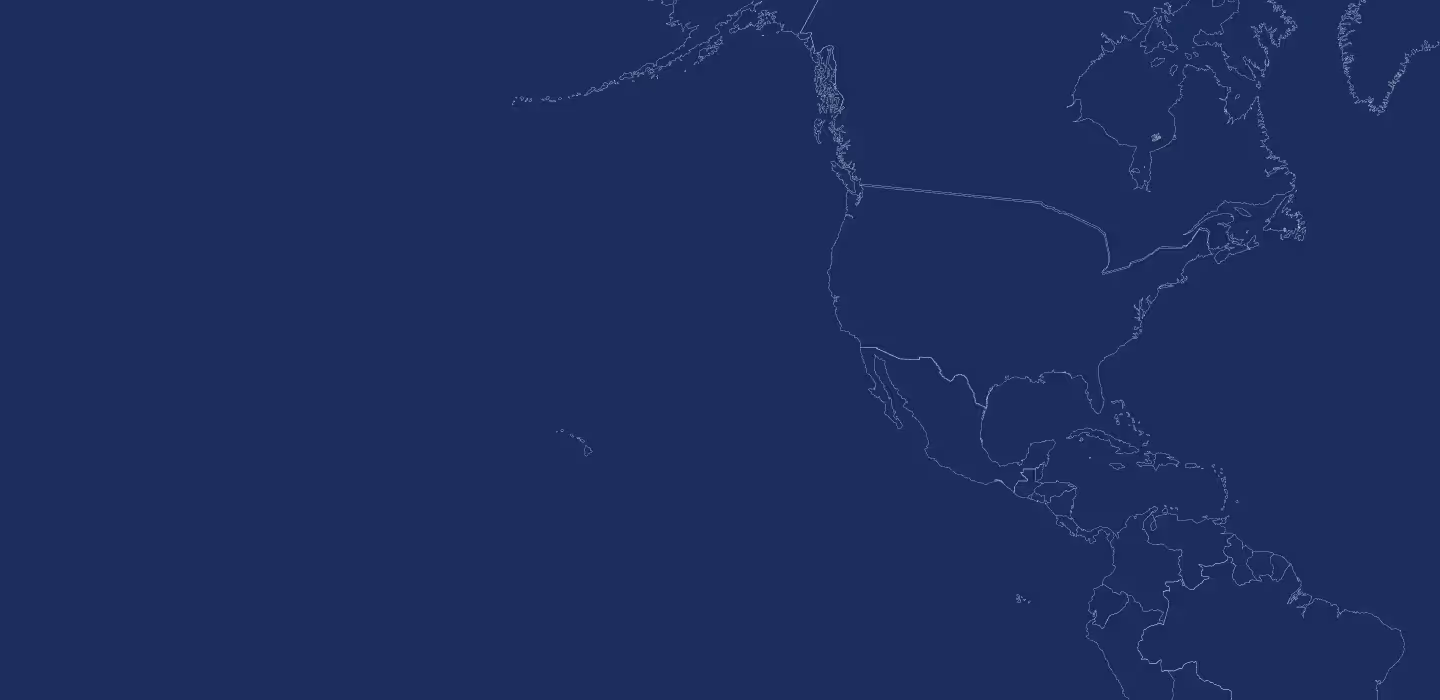
Map of the Americas highlighting pharmaceutical compliance regions

驾驭监管格局

此页面是了解美洲各国监管要求的集中资源。下面列出的每个国家都包含指向其各自的合规准则和义务的链接。无论目标是确保遵守DSCSA,还是保持与当地序列化规定的一致性,该中心均可简化访问塑造整个非洲大陆药品供应链的基本监管框架的途径。

所有法规

Graphic element

我们 DSCSA

导航与LSPedia一起探索《药品供应链安全法》(DSCSA)的复杂之处。我们的资源中心提供见解和最新信息,确保制药公司在不断变化的美国监管环境中保持合规。

加拿大

Pharmaceutical products in Canada are regulated by Health Canada under the Food and Drugs Act and the Food and Drug Regulations. Health Canada oversees the authorization, labeling, manufacturing, importation, and distribution of medicines to ensure product safety, quality, and efficacy.

Canada does not currently operate a national pharmaceutical serialization or track and trace system similar to those implemented in the United States, European Union, or several Middle East and CIS countries. Instead, regulatory oversight focuses on product authorization, good manufacturing practices, labeling compliance, and pharmacovigilance.

Canada has implemented drug identification and verification mechanisms, including the Drug Identification Number (DIN) and national drug product databases that allow regulators and healthcare professionals to verify approved medicines. Supply chain traceability is generally managed through industry systems and wholesale distribution records, rather than through a centralized regulatory serialization platform.

厄瓜多尔

Ecuador regulates pharmaceutical products through the National Agency for Regulation, Control and Health Surveillance (ARCSA). The country has established requirements to strengthen medicine identification and improve traceability across the pharmaceutical supply chain.

The regulatory framework focuses on standardized product identification using GS1 barcodes and the capture of product data to support traceability and product verification. The objective is to reduce counterfeit medicines and improve regulatory visibility of pharmaceutical distribution.

Manufacturers, importers, and distributors supplying medicines to Ecuador must ensure pharmaceutical products include standardized barcode identification and maintain traceability records throughout the distribution chain.

哥伦比亚

Colombia has explored the implementation of a national pharmaceutical traceability system to strengthen supply chain transparency and combat counterfeit medicines. The initiative was introduced by the Ministry of Health and Social Protection and the national regulator Instituto Nacional de Vigilancia de Medicamentos y Alimentos (INVIMA) through the development of the National Medicines Traceability System (Sistema Nacional de Trazabilidad de Medicamentos).

The objective of this system is to enable identification and monitoring of medicines throughout the supply chain, from manufacturing or importation through distribution to dispensing.

However, serialization and full pharmaceutical track and trace reporting are not currently mandatory in Colombia. The traceability program has remained largely in pilot and regulatory development stages, and nationwide serialization enforcement has not yet been implemented.

Pharmaceutical companies operating in Colombia therefore focus on regulatory compliance and supply chain documentation, while monitoring regulatory updates related to the potential future implementation of traceability requirements.

巴西安维萨

Brazil previously planned to implement a national pharmaceutical serialization system known as the National Drug Control System (SNCM) under the authority of the Brazilian Health Regulatory Agency (ANVISA). The program aimed to establish full traceability of medicines across the supply chain using serialization and electronic reporting.

However, the national serialization mandate was revoked before full nationwide implementation. The Brazilian government formally withdrew the SNCM traceability mandate, and there is currently no active national requirement for pharmaceutical serialization or serial level reporting in Brazil.

Pharmaceutical traceability in Brazil therefore operates primarily through batch level identification, supply chain documentation, and regulatory oversight managed by ANVISA.

阿根廷 ANMAT

Argentina operates a national pharmaceutical traceability program managed by Administración Nacional de Medicamentos, Alimentos y Tecnología Médica (ANMAT).

The system is called the National Medicines Traceability System (Sistema Nacional de Trazabilidad de Medicamentos – SNT) and tracks medicines from manufacturer or importer through distribution to dispensing. The objective is to prevent counterfeit medicines and allow regulators to monitor product movement in real time across the supply chain.

All supply chain participants including manufacturers, importers, distributors, logistics operators, pharmacies, and hospitals must report traceability events to ANMAT’s central database.  

Unlike many modern systems, Argentina’s program focuses on event reporting rather than full hierarchical aggregation, but serialized identifiers must still be maintained across distribution activities.

未找到法规

单击 “全部清除” 可重置过滤器。

谢谢!您提交的内容已收到!
哎哟!提交表单时出了点问题。
联系我们

今天就联系我们

给我们发消息

我们很乐意听取你的意见!

Check - Elements Webflow Library - BRIX Templates

谢谢

感谢您与我们联系。我们会尽快回复您。
哎哟!提交表单时出了点问题。