




Authorized Trading Partners (ATP)
授权贸易伙伴


.webp)


%201.webp)



%201.webp)




序列化并非一刀切。美国、欧盟、亚洲和中东的法规要求各不相同,企业必须应对错综复杂的要求。您准备好实现全球合规了吗?
.avif)
如果您热衷于有所作为,并能在协作环境中茁壮成长,LSPedia 就是您的理想之选。

.svg)
Products are required to display information in writing.

Sellable units are uniquely identified enabling a more granular traceability.
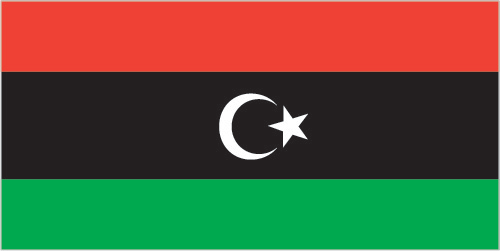
Pharmaceutical products in Libya are regulated by the Libyan Ministry of Health and the Libyan National Center for Food and Drug Control (NCFDC). The regulatory framework focuses on ensuring medicine quality, preventing counterfeit products, and strengthening oversight of pharmaceutical imports and distribution.
Libya has introduced initiatives to improve medicine authentication and supply chain monitoring, including the use of barcode based product identification on pharmaceutical packaging. These measures are intended to support verification of medicines distributed within the country and improve regulatory monitoring.
However, Libya does not currently operate a fully implemented national pharmaceutical serialization or track and trace system. Regulatory oversight relies primarily on medicine registration, import control, and inspection of distribution channels.
Pharmaceutical companies supplying medicines to Libya should monitor regulatory developments, as authorities have expressed interest in expanding digital traceability mechanisms in the future.
Pharmaceutical products distributed in Libya must comply with labeling requirements defined by the Ministry of Health and the National Center for Food and Drug Control.
Packaging must include standard pharmaceutical identification elements such as:
Barcodes may be included on pharmaceutical packaging to support product identification and supply chain management, but unit level serialization using DataMatrix codes is not currently mandated by Libyan regulations.
2000s onward
Libya strengthened pharmaceutical regulatory oversight through the establishment of the National Center for Food and Drug Control.
Recent years
Authorities have increased efforts to combat counterfeit medicines and improve monitoring of pharmaceutical imports and distribution.
Current Status
Libya has not yet implemented a mandatory pharmaceutical serialization or national traceability program.
Since serialization is not currently mandated, Libya does not require reporting of serialized pharmaceutical product events such as commissioning, shipment, receipt, or dispensing.
Pharmaceutical companies must instead maintain standard documentation related to product registration, importation, and distribution that can be reviewed during regulatory inspections.
Libya does not currently operate a national pharmaceutical serialization reporting platform.
Regulatory oversight is managed through systems and procedures operated by:
These authorities oversee medicine registration, import authorization, and market surveillance activities but do not currently require electronic reporting of serialized pharmaceutical product movements.
Libyan pharmaceutical regulations do not require aggregation or hierarchical packaging identification for medicines.
Companies may implement internal aggregation practices for logistics or export compliance, but these practices are not mandated by national regulatory authorities.
We invite you to learn more about how LSPedia can support your compliance and supply chain needs. For more information about our solutions, partnership opportunities, or to speak with one of our experts.

