Traçabilité MEA

Central Hub for the Middle East

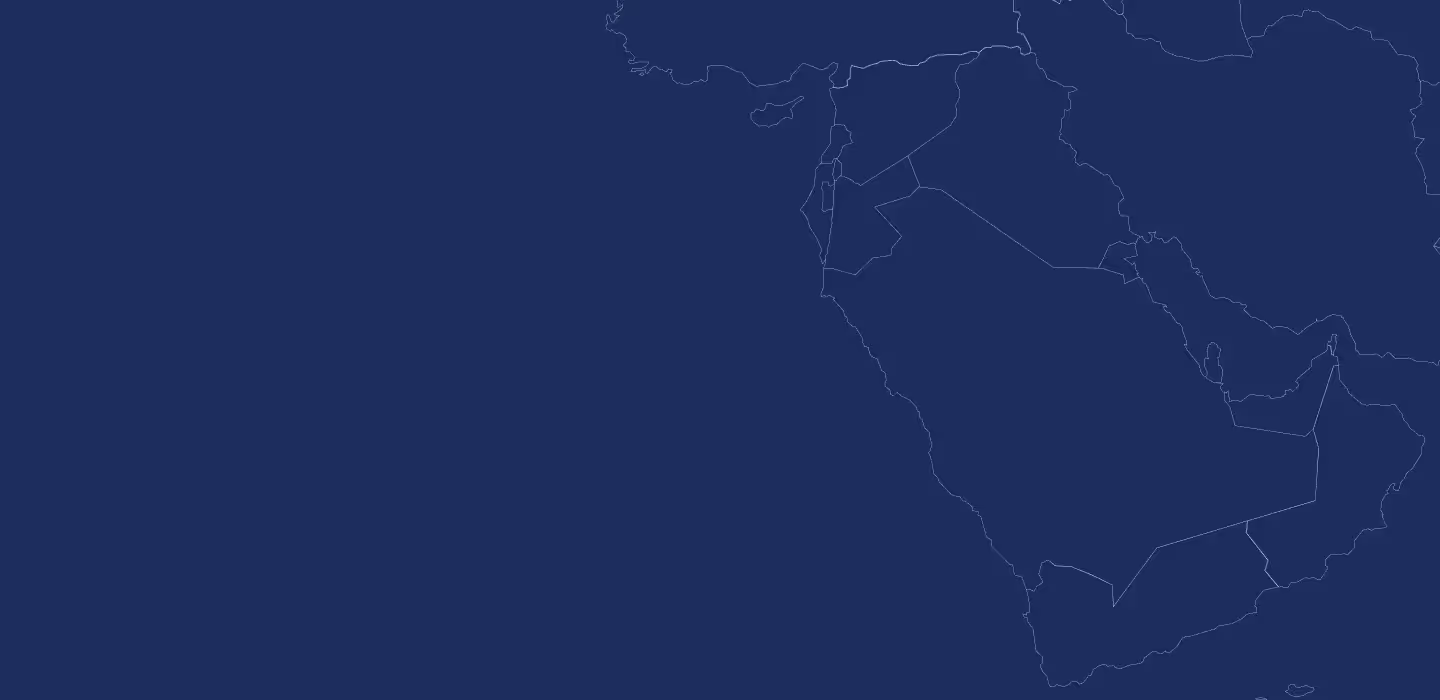
Map of the Middle Eastern region highlighting compliance regions

Naviguer dans le paysage réglementaire

Cette page fournit un aperçu consolidé des réglementations pharmaceutiques au Moyen-Orient et en Afrique. Chaque pays répertorié présente une brève description de son cadre réglementaire, avec un accès direct à des informations plus détaillées. Le hub est conçu pour clarifier les diverses attentes en matière de conformité dans la région MEA, en mettant en évidence à la fois les exigences émergentes et les normes établies dans la région.

Toutes les réglementations

Graphic element

Arabie Saoudite

Saudi Arabia mandates end to end pharmaceutical traceability through the Drug Track and Trace System (DTTS) operated by the Saudi Food and Drug Authority (SFDA). All human medicines distributed in the Kingdom must be serialized, aggregated and reported across every supply chain step. The system aims to ensure patient safety, remove counterfeit products and give regulators visibility from production to final dispensing.

Manufacturers, importers, wholesalers and pharmacies must report all operations in near real time to remain compliant and avoid shipment delays.

Bahreïn

Bahrain requires pharmaceutical manufacturers, importers and distributors to serialize and track medicines through the NHRA Track and Trace System. All human medicines imported into Bahrain must carry GS1 DataMatrix barcodes and must be reported at key steps in the supply chain.

Bahrain’s model is similar to the systems used across the GCC region, aiming to improve patient safety and prevent counterfeit medicines. While less complex than Russia or Kazakhstan, Bahrain still requires accurate serialization, aggregation and event reporting for customs clearance and distribution.

Égypte

Egypt has implemented a national pharmaceutical traceability framework to improve medicine supply chain transparency and combat counterfeit products. The system is managed through the Egyptian Drug Authority (EDA) under the Ministry of Health.

Egypt’s traceability framework is built around the Egyptian Drug Tracking System (EDTS), which requires pharmaceutical products to carry GS1 compliant DataMatrix barcodes with serialized identifiers. The system enables tracking of medicines from manufacturers and importers through distribution to pharmacies.

The EDTS platform supports digital verification of medicines and helps regulators monitor product movement across the pharmaceutical supply chain. Serialization and traceability requirements apply primarily to human prescription medicines, with implementation occurring in phases.

Émirats arabes unis

The United Arab Emirates operates a national pharmaceutical traceability system called Tatmeen. All human medicines imported or sold in the UAE must carry GS1 compliant DataMatrix barcodes and must be reported across the full supply chain. Tatmeen aims to improve patient safety, reduce counterfeit risks and give regulators full visibility of product movement.

Manufacturers and importers must serialize, aggregate and report all operations in near real time to avoid delays at customs and ensure uninterrupted supply.

Iraq

Iraq regulates pharmaceutical products through the Ministry of Health and the State Company for Marketing Drugs and Medical Appliances (KIMADIA). In recent years, the Iraqi government has taken steps to strengthen medicine supply chain security and combat counterfeit pharmaceutical products through the introduction of digital verification and traceability measures.

Iraq has introduced requirements for certain medicines to carry GS1 compliant DataMatrix barcodes to enable product verification and improve traceability within the supply chain. The initiative aims to support authentication of medicines distributed through government procurement channels and licensed distributors.

Implementation of serialization requirements has been phased, with priority given to medicines supplied through public healthcare programs and government distribution networks. The system is intended to improve oversight of pharmaceutical imports and distribution within Iraq.

ITs turcs

Türkiye operates one of the most advanced pharmaceutical track and trace systems in the world, known as the İlaç Takip Sistemi (ITS). The system is managed by the Turkish Medicines and Medical Devices Agency (TITCK) under the Ministry of Health.

The ITS platform provides full end to end traceability of pharmaceutical products from manufacturer or importer to the point of dispensing. Every medicine pack must be serialized and reported to the national system. All supply chain participants including manufacturers, importers, wholesalers, pharmacies, and hospitals must report product movements through the ITS system.

The system prevents counterfeit medicines, ensures supply chain transparency, and enables rapid product recalls and market monitoring.

Aucune réglementation trouvée

Cliquez sur Tout effacer pour réinitialiser les filtres.

Merci ! Votre candidature a été reçue !
Oups ! Une erreur s'est produite lors de l'envoi du formulaire.
Nous contacter

Contactez-nous dès aujourd'hui

Envoyez-nous un message

Nous aimerions avoir de vos nouvelles !

Check - Elements Webflow Library - BRIX Templates

Merci

Merci de m'avoir contacté. Nous vous recontacterons dans les plus brefs délais.
Oups ! Une erreur s'est produite lors de l'envoi du formulaire.